
Kids' sneakers price comparison
8 Sneakers from established makers · Selection index 122.6 −1.6% 7 d · avg €33 · as of 18/10/2026
Price table · 8 Sneakers
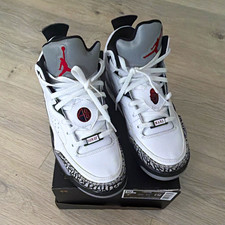 NIK·JORDANJordan Son Of Mars Air Jordan Mid Top Sneaker€70±0.0%
 PUM·SHUFFLEPUMA Shuffle Downtown LO OG JR Sneaker€14±0.0%
 ADI·KINDERadidas Unisex Kinder Grand Court 3.0 Shoes JUNIOR€17−10.4%
 ADI·KINDERadidas Unisex Kinder Runfalcon 6 Junior Shoes€30−11.9%
 LIC·BERNIELico Bernie V Unisex Kinder Multisport Indoor Schuhe€22±0.0%
 LOT·HALLENSCHallenschuhe für Jungen, Lotto Pacer K, Gelb€29±0.0%
 NIK·AIRnike air Air Max Sneaker Low Top Jugendliche€65±0.0%
 LOT·STYLECODLOTTO Stylecode: 2600110K Pacer K Kids Sportschuh Freaky€20+0.2%
- NIK·JORDANJordan Son Of Mars Air Jordan Mid Top Sneaker Weiß/Schwarz/Rot JugendBlack · Mid€70±0.0%––
- PUM·SHUFFLEPUMA Shuffle Downtown LO OG JR Sneaker, Weiß/Schwarz/Dampfgrau, 3 UKBlack · 35€14±0.0%––
- ADI·KINDERadidas Unisex Kinder Grand Court 3.0 Shoes JUNIORBlack · 35€17±0.0%−10.4%−10.4%
- ADI·KINDERadidas Unisex Kinder Runfalcon 6 Junior ShoesBlack · 39€30±0.0%−11.9%−11.9%10 d
- LIC·BERNIELico Bernie V Unisex Kinder Multisport Indoor Schuhe, Weiß/ Lila/ RosaPink · Kids€22±0.0%±0.0%±0.0%
- LOT·HALLENSCHallenschuhe für Jungen, Lotto Pacer K, GelbYellow · Kids€29±0.0%±0.0%–
- NIK·AIRnike air Air Max Sneaker Low Top Jugendliche Rot/Schwarz/Weiß EU 40Black · 40€65±0.0%––
- LOT·STYLECODLOTTO Stylecode: 2600110K Pacer K Kids Sportschuh Freaky Yellow/BlackBlack · Kids€20±0.0%+0.2%+33.3%25 d
Children's feet grow fast – which makes the right size all the more important. Here you can compare kids' sneakers and indoor sports shoes from several shops.
The right size for children's feet
Children's shoes need an allowance of about 12 to 17 millimetres in front of the longest toe: around 6 millimetres because the foot moves forward when walking, plus a few millimetres of room to grow. Too much space isn't good either, because the child slides around in the shoe. Children often don't notice when a shoe pinches – so don't rely on their judgement; measure instead.
Ideally, have your child stand on a sheet of paper in socks in the evening, mark the heel and the longest toe and measure the distance. Measure both feet; the larger one counts. Feet grow quickly in the toddler years, so checking every three months makes sense.
Velcro, laces or slip-on?
Which fastening is right depends on age and use:
- Velcro: ideal for nursery and primary school – children can put their shoes on themselves.
- Laces: the best hold, sensible for sport and older children.
- Elastic laces with a Velcro strap: a good compromise for school PE.
- Slip-on: comfortable, but with less hold when running and playing.
Indoor shoes for school and clubs
For PE, many German schools require indoor sports shoes with a light, non-marking sole. Models such as the Lico Boulder, hummel Multiplay or adidas indoor shoes have a light rubber sole and often a Velcro fastening. Look for a non-slip, flexible sole and good heel hold. Outdoor sneakers with black soles are not allowed in many sports halls.
Second-hand or new?
Because children's feet grow quickly, it's tempting to pass shoes on. From an orthopaedic point of view, this isn't without problems, as the insole and heel counter adapt to the previous wearer's foot. That's why our list only shows new goods by default. Buy children's shoes in the right size rather than "to grow into" – shoes that are too big increase the risk of tripping.
Material and quality
Children's feet sweat more than adults' feet. A breathable upper made of mesh or leather and a removable footbed that you can air or wash are therefore an advantage. The sole should bend easily in the front third so the child can roll through naturally. A firm heel counter provides support. Also look for non-slip soles and make sure no seams press on the inside.